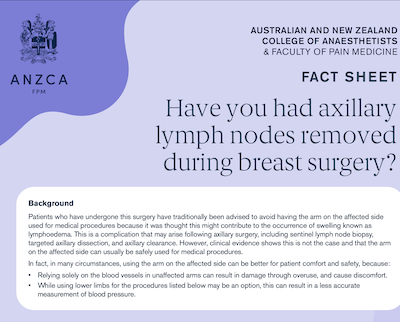
Patient Information
If you are still unsure about your procedure, please contact us.
What is Anaesthesia
Anaesthesia is the use of medicines to prevent pain during surgery and other procedures. These medicines are called anaesthetics. They may be given by injection, inhalation, topical lotion, spray, eye drops, or skin patch. They cause you to have a loss of feeling or awareness.
Anaesthesia may be used in minor procedures, such as filling a tooth. It could be used during childbirth or procedures such as colonoscopies. And it is used during minor and major surgeries. An anaesthetist is a doctor who specialises in giving anaesthesia.
Local Anaesthesia
Numbs a small part of the body. It might be used on a tooth that needs to be pulled or on a small area around a wound that needs stitches. You are awake and alert during local anaesthesia.
Regional Anaesthesia
Used for larger areas of the body such as an arm, a leg, or everything below the waist. You may be awake during the procedure, or you may be given sedation. Regional anaesthesia may be used during childbirth, a Caesarean delivery (C-section), or minor surgeries.
General Anaesthesia
Affects the whole body. It makes you unconscious and unable to move. It is used during major surgeries, such as heart surgery, brain surgery, back surgery, and organ transplants.
Frequently Asked Questions
Modern Anaesthesia is extremely complex, and our training and experience makes Australia one of the safest countries in the world to undergo Anaesthesia. In a consultation before your Anaesthetic, your Anaesthetist will discuss your relevant medical history and the type of Anaesthesia that is suited to your particular situation.
This may involve a combination of local anaesthesia, sedation, nerve blocks, spinal or epidural anaesthesia or a general anaesthetic. Post operative pain management and recovery will also be explained. If you have any question or concerns, this is the time to discuss them with your Anaesthetist.
The Anaesthetist will administer through a cannula inserted into a vein, usually in your hand or arm. With the assistance of a trained Anaesthetic Nurse, medication will be given to commence the Anaesthesia and your Anaesthetist will secure your airway with a variety of devices. You are then placed in a carefully controlled state of unconsciousness which is Anaesthesia. This will allow your surgery or procedure to proceed safely.
Your Anaesthetist will administer and prescribe pain relief for the recovery and post operative period. We stay with our patients throughout the entire operation or procedure, monitoring each breath and heartbeat, and carefully adjusting dosages and drugs to maintain safe Anaesthesia. Once your procedure is completed and your Anaesthesia is reversed, your Anaesthetist will transport you to the Recovery area and allow you to wake up safely in the care of the skilled Recovery nursing staff.
Your Anaesthetist will usually check on you before you are discharged (either home or to the ward) to discuss any questions you may have. A prescription for pain relief and any other medication will be organised before discharge.
An Anaesthetist is a doctor who has completed full medical training and then gone on to complete at least another five years of specialist training enabling him or her to perform the technical aspects of anaesthesia and fully manage all elements of patient care including responding to medical complications.
Your anaesthetist stays with you the entire time. He or she does not leave you until you are beginning to wake up, at which point you will be moved to the recovery room and into the care of a special nurse. While your operation is taking place, the anaesthetist monitors all of your vital functions to make sure you are safe and asleep.
They will treat any situation that arises and if required will administer a blood transfusion. They will also give you painkillers and drugs to treat nausea and vomiting so that you wake up as comfortable as possible.
Yes, the anaesthetic is a separate service to your surgery as a different specialist provides it, so it is billed independently of the surgeon.
Depending on the type of health insurance you have the cost of the anaesthetic may be wholly covered by your insurance or may incur an additional (out-of-pocket) fee. You will be advised of this fee prior to your surgery. Please ask if you have any questions about fees.
Procedure Brochures
ANAESTHESIA & YOU
ANAESTHESIA - BARIATRIC SURGERY
BREASTFEEDING AFTER ANAESTHESIA
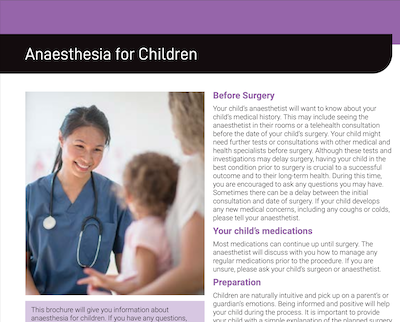
ANAESTHESIA FOR CHILDREN
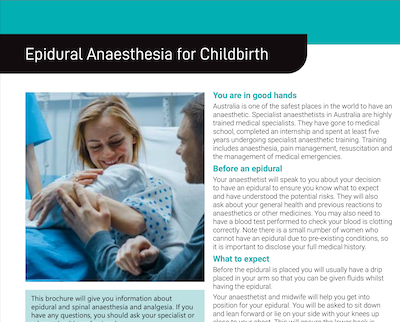
ANAESTHESIA FOR CHILDBIRTH
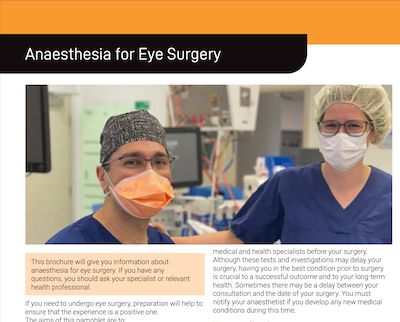
ANAESTHESIA FOR EYE SURGERY
ANAESTHESIA FOR GASTRO ENDOSCOPY
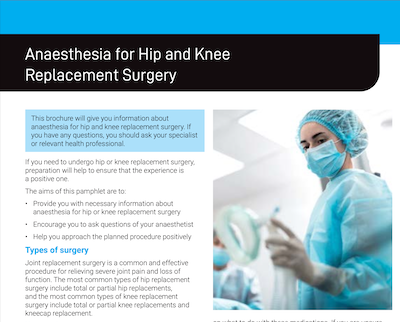
ANAESTHESIA FOR HIP & KNEE SURGERY
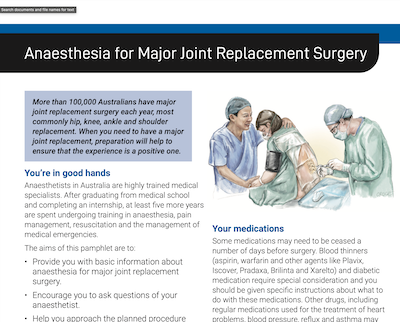
ANAESTHESIA FOR JOINT REPLACEMENT
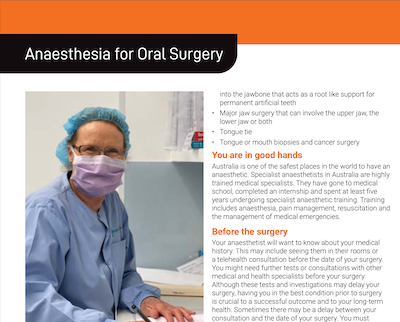
ANAESTHESIA FOR ORAL SURGERY
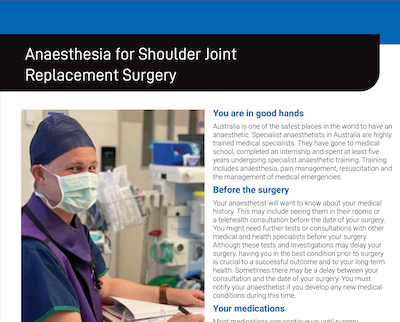
ANAESTHESIA FOR SHOULDER SURGERY
ANAESTHESIA FOR SPINAL SURGERY